Sky TV Repack
Client
Sky
Role
UX/UI design, brand, AI
Outcomes
Within two weeks of soft launch, conversion rose 16% (2.5% → 2.9%). Essential TV customers showed higher attach rates for Cinema and Sports, lifting ARPU. An A/B-tested comparison table drove a +7.7% uplift in Essential TV uptake.
Within two weeks of soft launch, conversion rose 16% (2.5% → 2.9%). Essential TV customers showed higher attach rates for Cinema and Sports, lifting ARPU. An A/B-tested comparison table drove a +7.7% uplift in Essential TV uptake.
Background
Sky was losing ground to cheaper, ad-funded streaming rivals. With its only entertainment package starting at £26/month, customers struggled to see the value and had no affordable way in. Sky needed to reposition its entertainment offer around a more accessible entry point: Essential TV. The business goals were to increase [SOIP spelled out] sales and raise value per customer through premium add-ons.
Sky was losing ground to cheaper, ad-funded streaming rivals. With its only entertainment package starting at £26/month, customers struggled to see the value and had no affordable way in. Sky needed to reposition its entertainment offer around a more accessible entry point: Essential TV. The business goals were to increase [SOIP spelled out] sales and raise value per customer through premium add-ons.
My role
I defined and designed the full digital experience. Working with product and commercial teams, I turned the strategic goals into a clear customer story, positioning Essential TV as the accessible way into Sky. That meant communicating value at every stage: simple comparison tools, clear package differences without overwhelm, and editorial space to bring the content to life.
I defined and designed the full digital experience. Working with product and commercial teams, I turned the strategic goals into a clear customer story, positioning Essential TV as the accessible way into Sky. That meant communicating value at every stage: simple comparison tools, clear package differences without overwhelm, and editorial space to bring the content to life.
Adding motion to the hero
The hero didn’t need to move, but a new product deserved some excitement, and motion is the fastest way to draw the eye. There was no animated asset, so I generated one from the static image using AI. It was always a placeholder that brand would have replaced before launch, but it made the idea visible early enough to get it agreed internally.
The hero didn’t need to move, but a new product deserved some excitement, and motion is the fastest way to draw the eye. There was no animated asset, so I generated one from the static image using AI. It was always a placeholder that brand would have replaced before launch, but it made the idea visible early enough to get it agreed internally.
Testing
We A/B tested a comparison table on the TV Base Pack page, showing how Essential TV differed and where its value sat. It drove a +7.7% uplift in uptake. Clearer structure didn’t just improve comprehension; it changed behaviour.
We A/B tested a comparison table on the TV Base Pack page, showing how Essential TV differed and where its value sat. It drove a +7.7% uplift in uptake. Clearer structure didn’t just improve comprehension; it changed behaviour.

Addendum
The idea we shelved
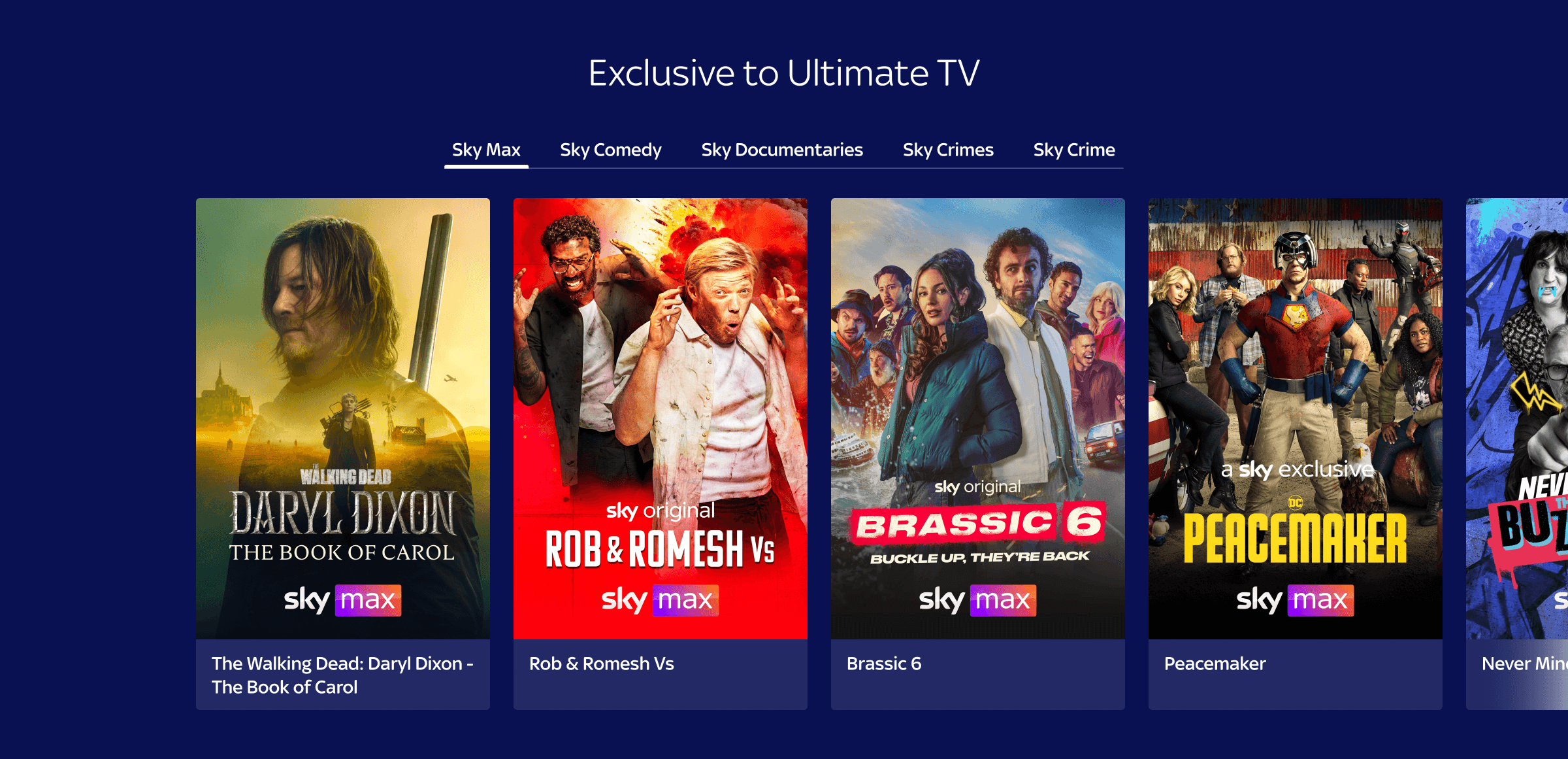
The pages worked, but they asked customers to recognise the titles. Most people know one in four. The rest are just a poster and a name, so customers leave to research on Google or YouTube, outside the journey that’s meant to sell the package.
My idea was to keep that research in place. Tap a title to see the trailer, synopsis, cast and related titles, then follow an actor a layer deeper. The question shifts from “do I want to watch this programme?” to “how much is on here that I’d watch?” It needed a sprint nobody had, for something nobody had asked for, so it was shelved.
The pages worked, but they asked customers to recognise the titles. Most people know one in four. The rest are just a poster and a name, so customers leave to research on Google or YouTube, outside the journey that’s meant to sell the package.
My idea was to keep that research in place. Tap a title to see the trailer, synopsis, cast and related titles, then follow an actor a layer deeper. The question shifts from “do I want to watch this programme?” to “how much is on here that I’d watch?” It needed a sprint nobody had, for something nobody had asked for, so it was shelved.
I’ve since built it with AI on top of the existing design, in twenty minutes rather than a sprint. Several of my assumptions about the interaction proved wrong, which I’d only have found by using it. That’s what stays with me: an idea no longer has to survive a capacity conversation before anyone can see it.
I’ve since built it with AI on top of the existing design, in twenty minutes rather than a sprint. Several of my assumptions about the interaction proved wrong, which I’d only have found by using it. That’s what stays with me: an idea no longer has to survive a capacity conversation before anyone can see it.
ALWAYS THINKING…ALWAYS LEARNING…ALWAYS CREATINg
ALWAYS THINKING…ALWAYS LEARNING…ALWAYS CREATINg
…SOMETHING
…SOMETHING
ALWAYS THINKING…ALWAYS LEARNING…ALWAYS CREATINg
ALWAYS THINKING…ALWAYS LEARNING…ALWAYS CREATINg
…SOMETHING
…SOMETHING